Galiot

Galiot
Product description
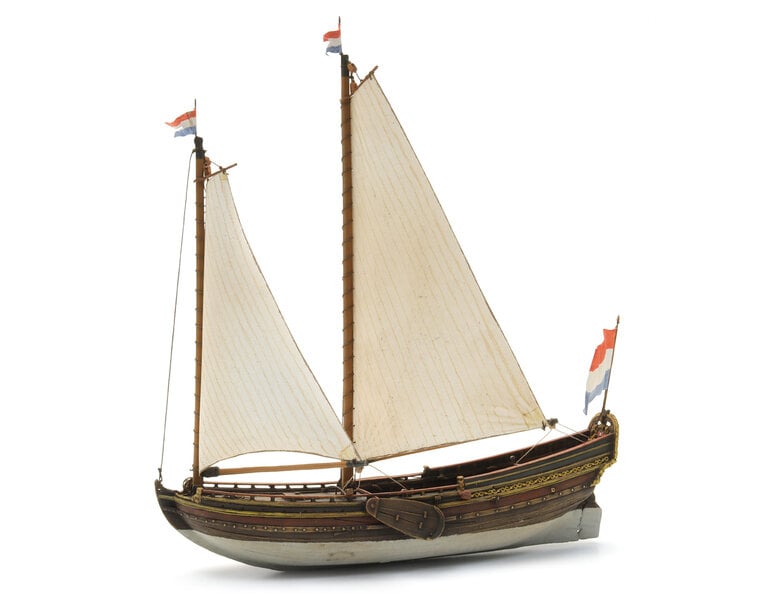
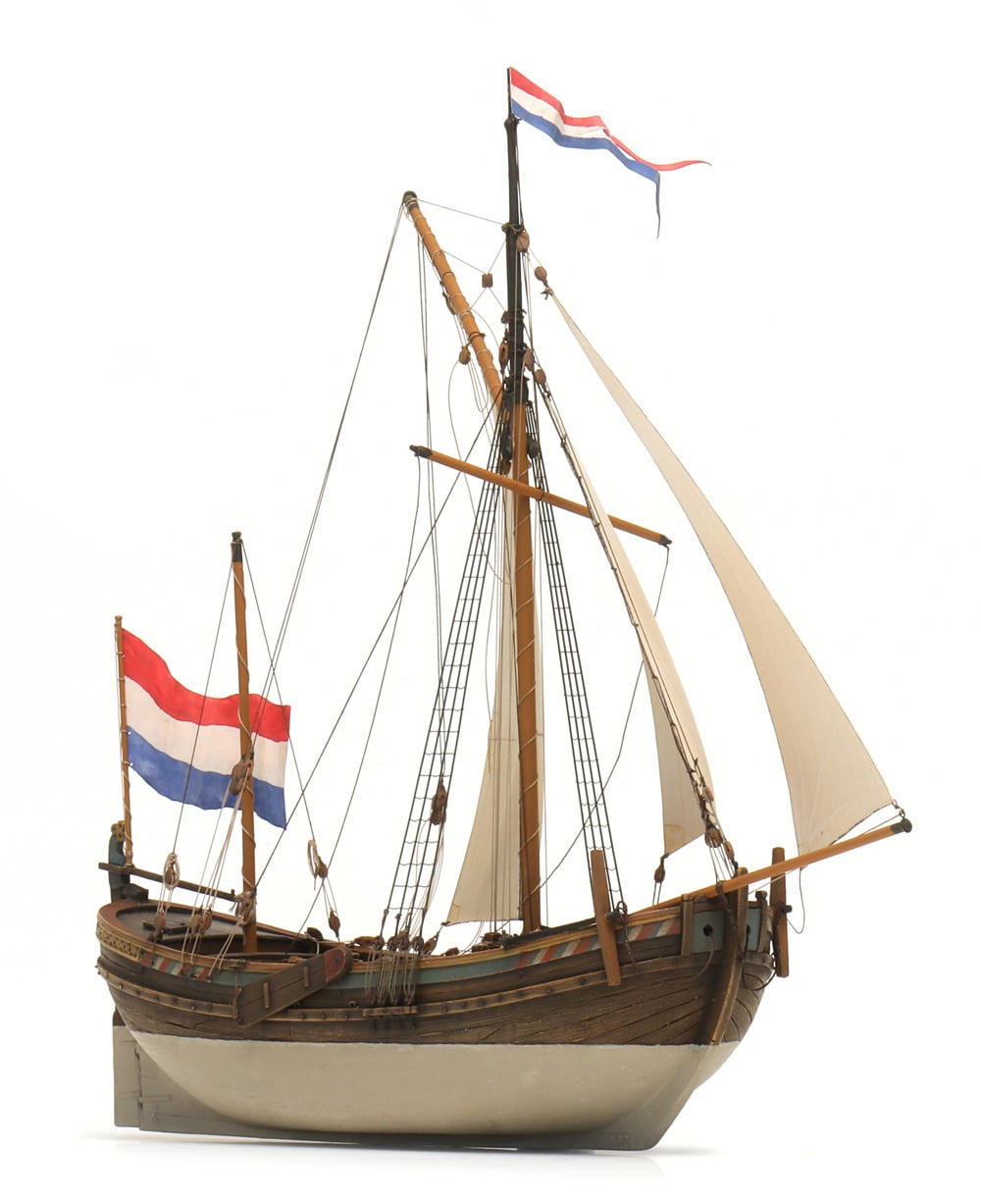
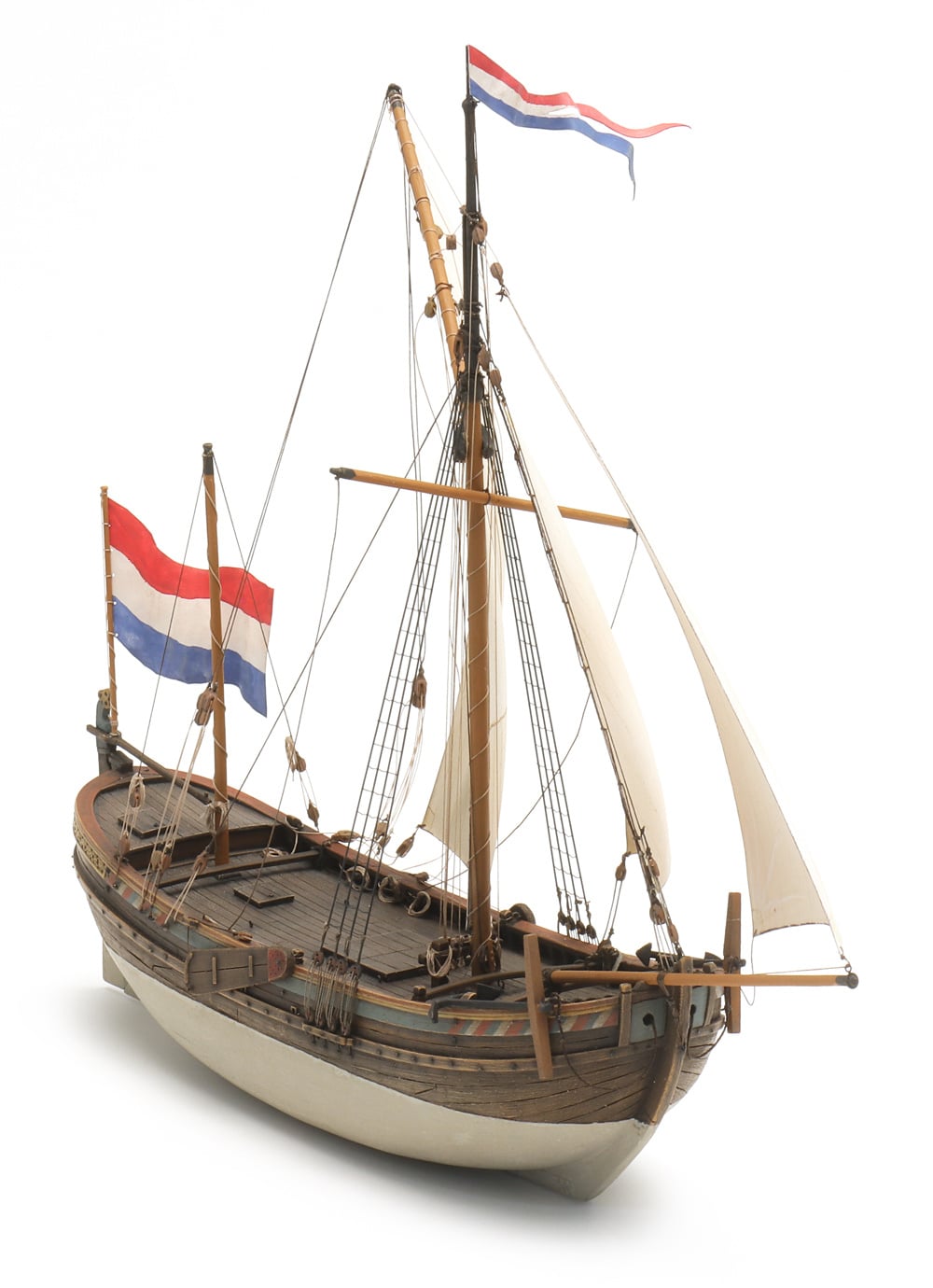
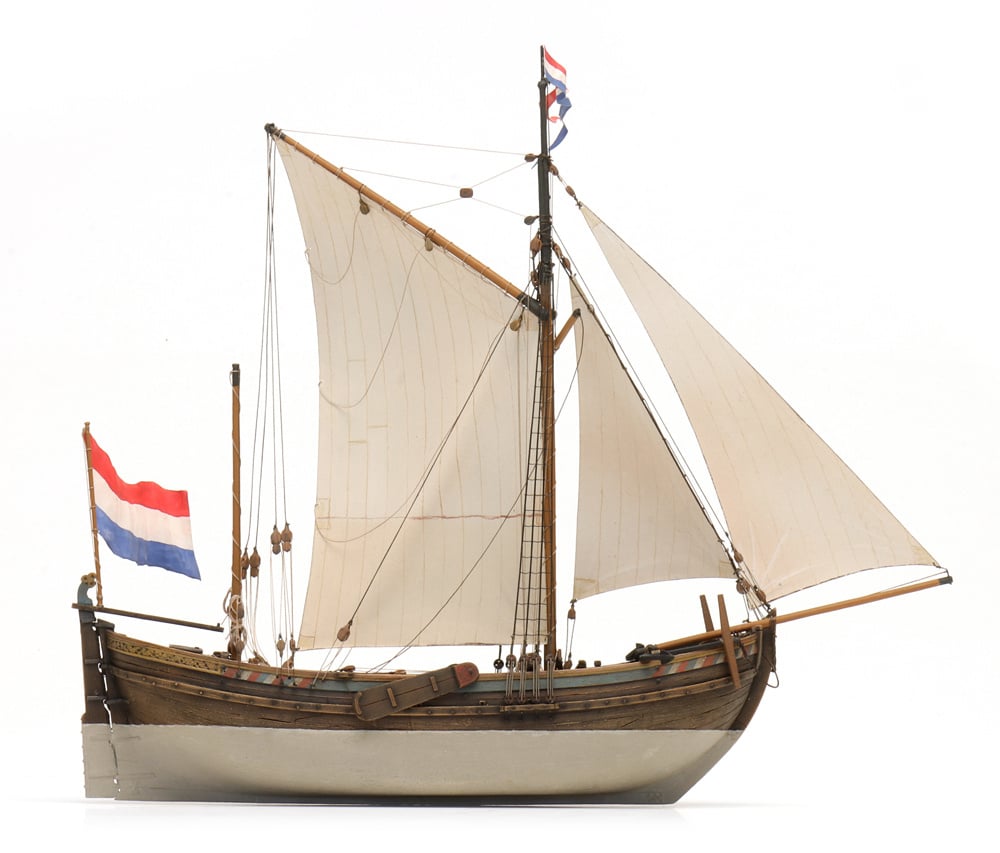
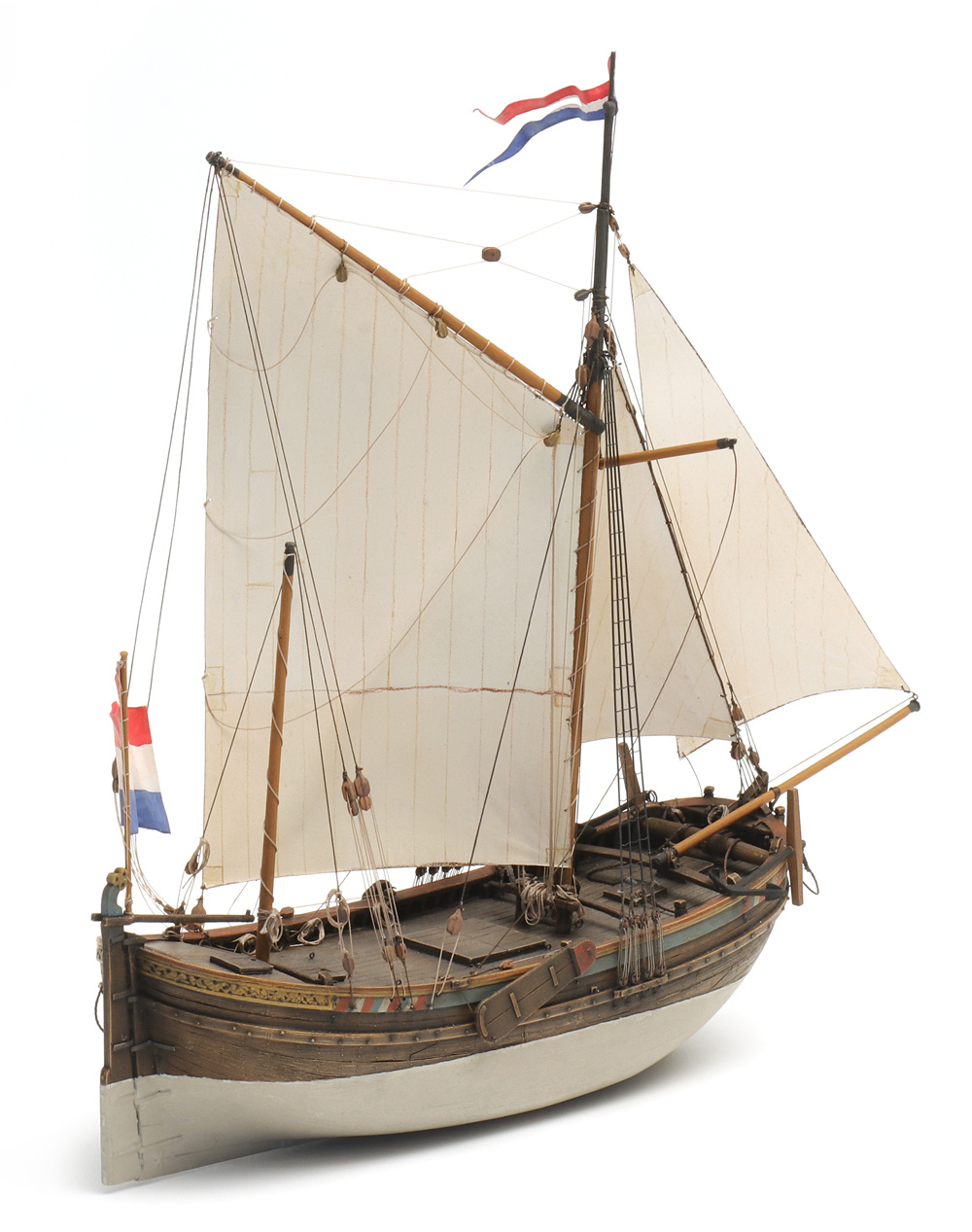
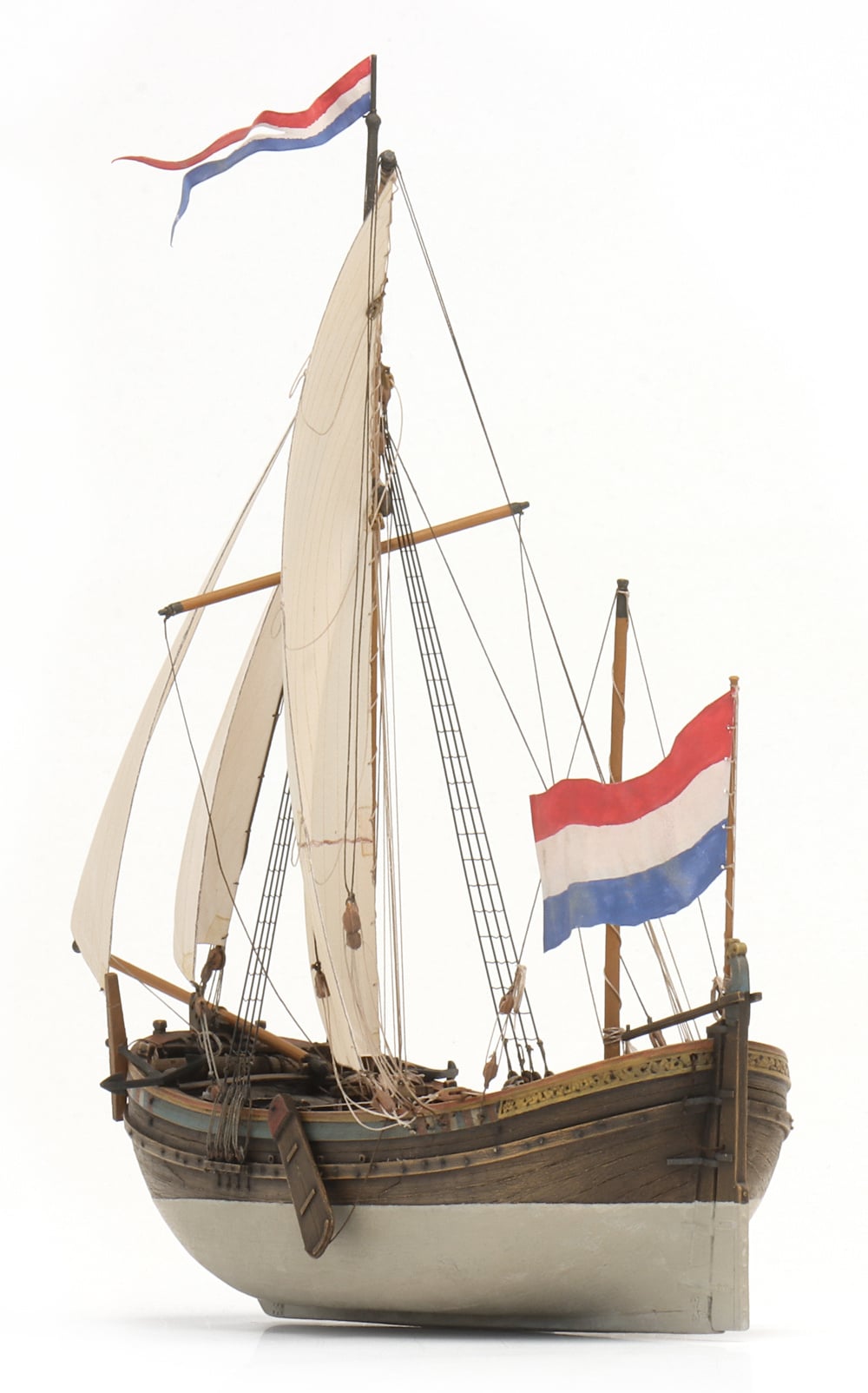
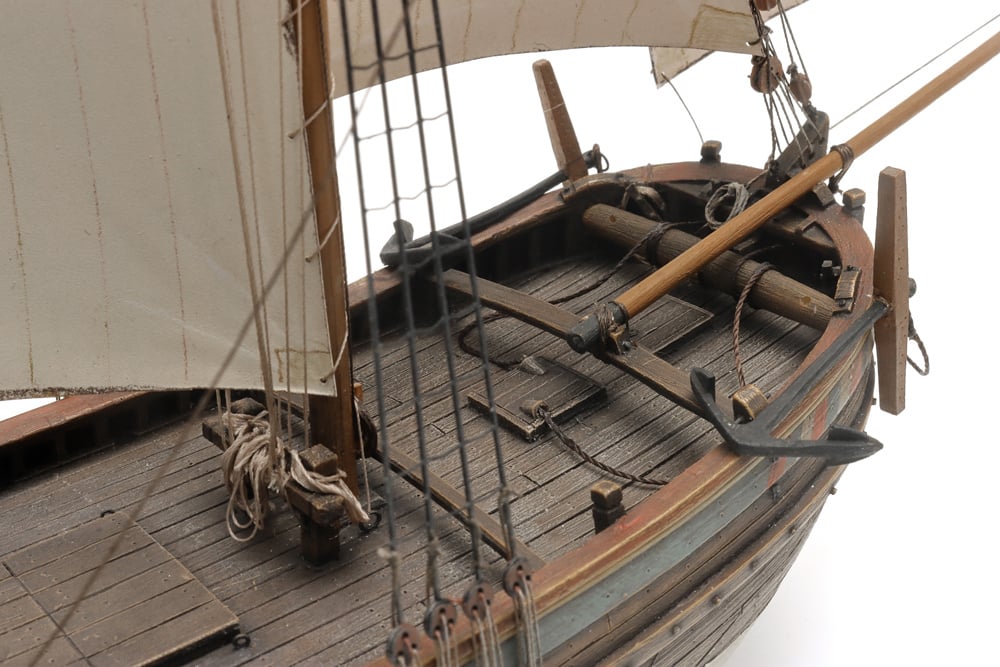
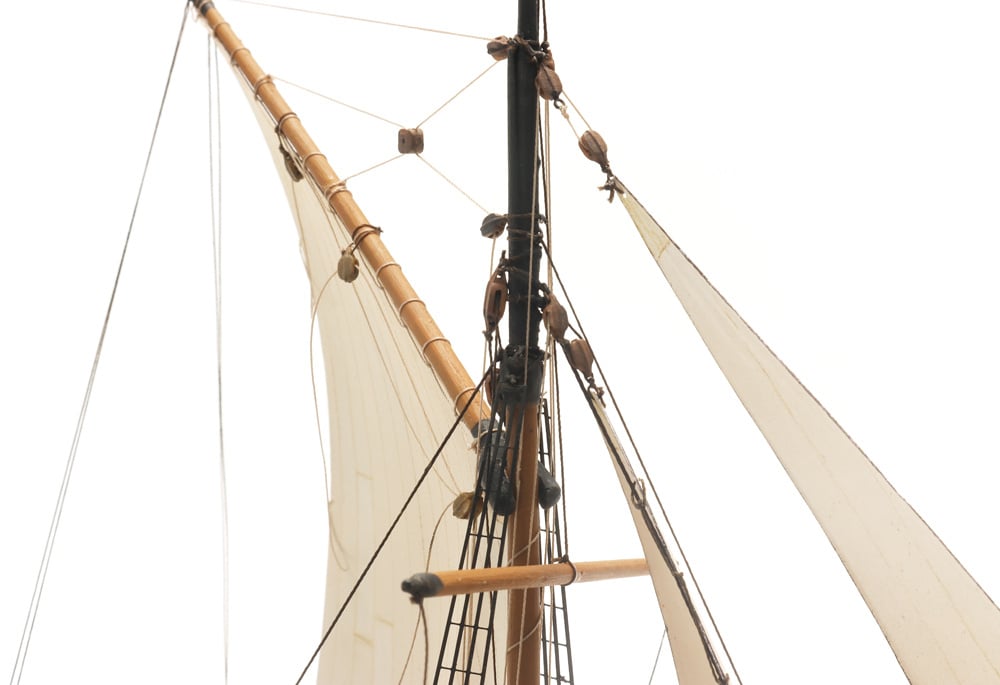
The origins of the galiot are unclear. The name first appeared in the early 16th century, though it referred to a very different type of vessel than the small coastal trader common in the 17th and 18th centuries. These ships were also sometimes called ‘‘galiota’’, possibly indicating Mediterranean origins. Galiots were small merchant vessels, typically rigged with a mainmast and a smaller foremast (a “mast-and-a-half” rig), though three-masted versions also existed. The foremast was positioned about one-third of the way along the ship, while a small mizzenmast stood just forward of the aft cabin; this cabin was raised slightly above deck level. The vessel featured a rounded bow and stern, and the tiller swung over the stern rail. It was also equipped with leeboards. Specifications for galiots – ranging from 65 to 87 Amsterdam feet in length – are provided in Nicolaas Witsen’s (1641–1717) work, "Aeloude en Hedendaegse Scheepsbouw en Bestier" (Ancient and Contemporary Shipbuilding and Management).
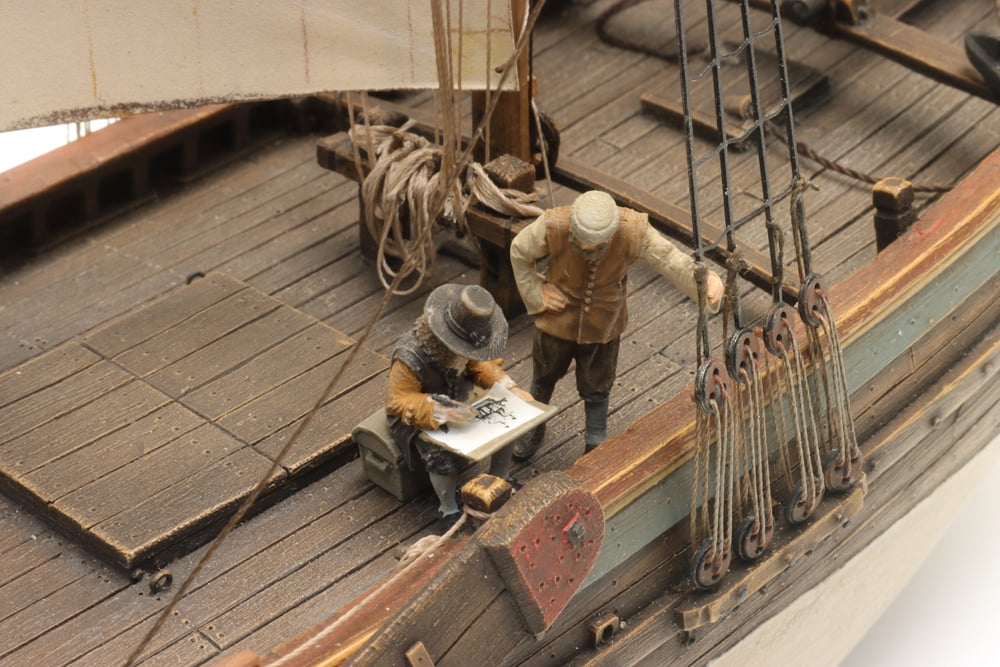
They must have been excellent, fast, and seaworthy vessels, as naval fleets frequently employed them as dispatch boats and supply ships. The galiot is perhaps best known through the work of the father-and-son team Van de Velde. Van de Velde the Elder was the first maritime artist to capture naval battles live – at great personal risk – in rapid sketches, which he and his son would later develop into finished paintings in their studio. He was assigned a galiot by the Admiralty.
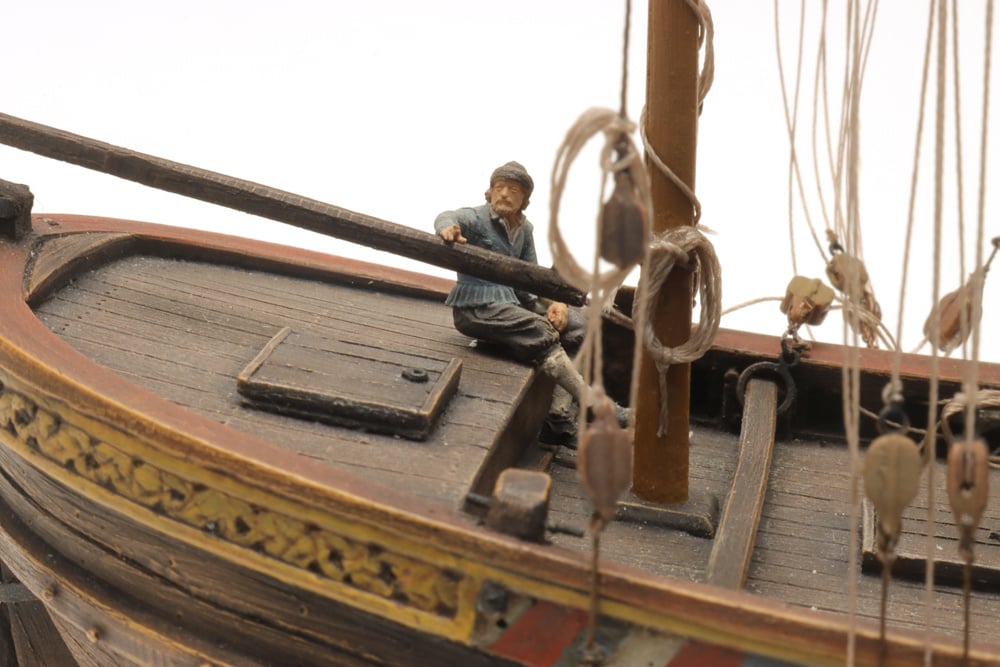
The galiot model offered by Artitec measures 65 feet. Naturally, a crew set is also available, featuring two sailors and both Van de Veldes at work.
Product specifications
- Scale:1:87
- Material:Resin, photo-etched parts and decals
 Download PDF Manual